
Evolve Life Pain & Injury Clinic
Helping you live well in your body
One practitioner. One aim. Many ways in.
Whether you're in pain right now, getting over an injury, or ready to get stronger, it's the same journey.
You just get on the line wherever you happen to be.
Evolve Life looks at the full picture: your pain, movement, stress, fears, and how these affect daily life. Your care is always individual. Lasting change comes from understanding pain, retraining movement, and gradually rebuilding confidence in your body.
Based in Henlow, Bedfordshire supporting people across Letchworth, Hitchin, Shefford, Biggleswade and surrounding areas.
If something hurts
Back pain, or flare-ups that keep coming back
Neck pain and tension that never fully settles
Sciatica and nerve-related symptoms
Joint and muscle pain, including shoulders and hips
Getting over an injury and not sure how to move forward
Pain that's been around long enough to be frustrating and confusing
Joints that move more than they should, or years of stretching that's never changed anything
Does this sound like you?
If nothing hurts, but
You want to get stronger and haven't a clue where to start, or you feel out of place in a gym
You've quietly stopped doing things you used to do without thinking about them
You're heading into or through menopause and want to hold on to your strength and your bone
Your joints feel unreliable, or you keep tweaking things, even though nothing's properly painful
You've been told everything's fine, and you don't feel fine
You'd rather build capacity now than wait for something to go wrong
Some people arrive in a lot of pain. Some arrive with none at all and want to keep it that way.
It's the same work either way, it just starts in a different place.
Why it may not have shifted yet: Pain is never just one thing!
If you're here to get stronger rather than to sort something out, skip ahead. This bit's for anyone who's tried things before and found they didn't quite work.
Pain is rarely about one structure, one scan result or one tight muscle. For most people it's a combination of things: irritation and protection, movement habits, stress, sleep, old injuries, confidence, and the way the body has adapted over time.
Treatment that only deals with one of those can change how you feel for a while, and often does. What it usually can't do is change the pattern underneath, which is why the pain comes back.
Why does my pain keep coming back? [link to the persistent pain page]
What changes things?
Making better sense of what's happening Getting to grips with persistent symptoms so they're less frightening and more predictable. For a lot of people this is the thing that shifts most, and it's the bit that usually gets skipped.
Movement, rehab and strength Building capability and confidence in a body you might have stopped trusting. Not getting you back to where you were, but forward from it.
Clinical somatics Slow, conscious movement that works with tension patterns and protective holding your nervous system has automated below the level you can feel. It's taught to you rather than done to you, so it becomes something you carry on with at home. Nothing's released or reset. Something's learned.
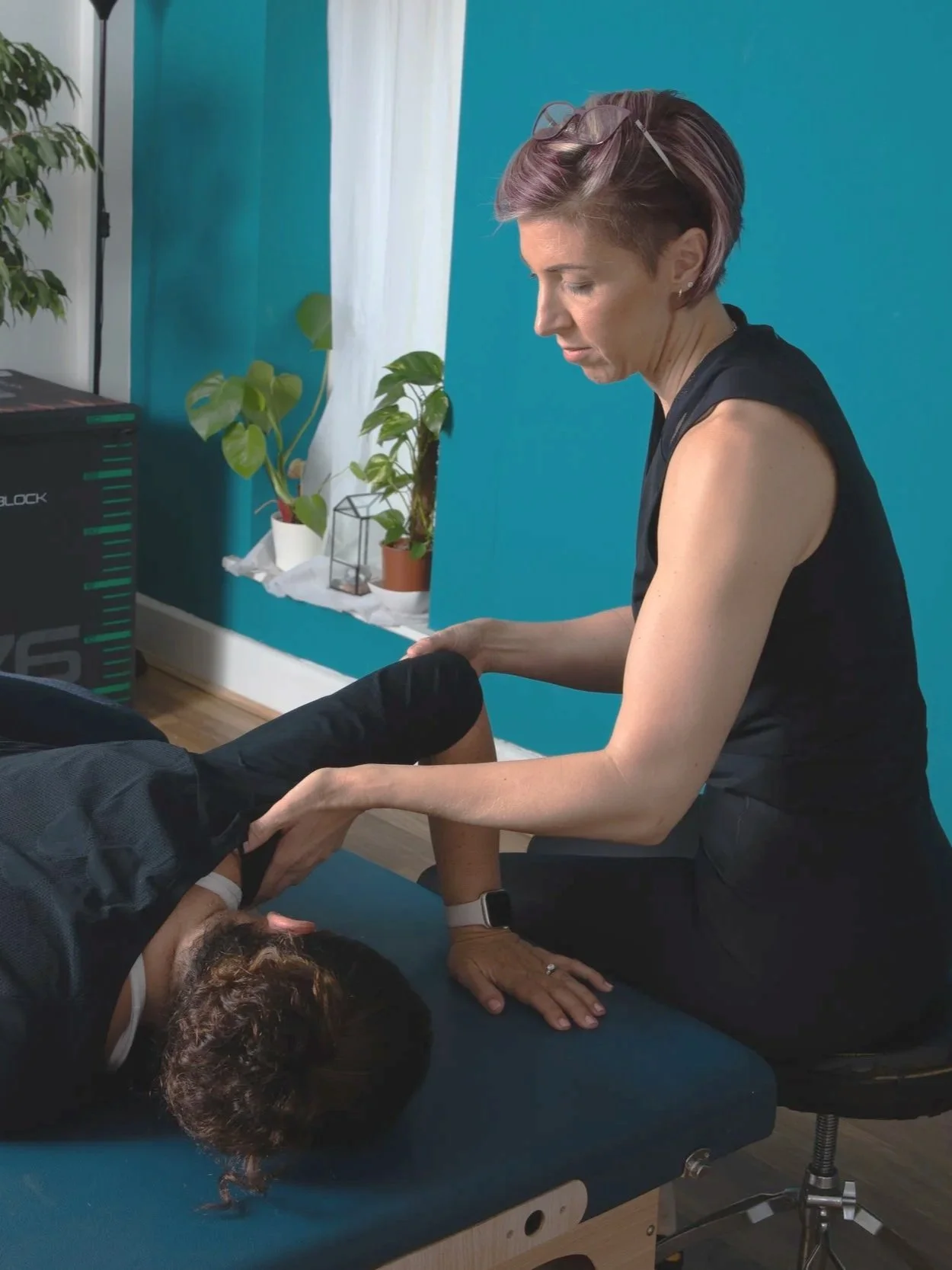
Hands-on care Touch is a direct input to your nervous system. Good hands-on work can lower the sense of threat and ease protective tension, which opens up a window where movement becomes possible again. It isn't putting anything back in place, and it works best as the thing that makes everything else possible rather than as the work itself. Where it suits you, this can include McTimoney chiropractic.
A plan that's actually realistic So you know what you're working on, why it matters, and what to do between sessions.
These aren't separate services to choose between. It's one approach, turned up or down for whoever's in front of me, based on a joint care plan!
How we would work together. I can't tell you what we'll do until we've met.
There's no fixed process here and no package to sign up to. What we do gets decided together, once I've seen the whole picture: how you move, what's already been tried, how you're sleeping, what your stress and workload look like, what you're wary of, and what you actually want to be able to do again. How you move tells me how you move. It doesn't tell me why you hurt.
Some people benefit from hands-on work early on. For others nothing else lands until they understand what's going on. Some are ready to build strength. For most it ends up being a combination, in proportions that only really become clear once we've started and I've seen how you respond.
What I can't promise you is an outcome. Nobody fully understands pain yet. The research keeps changing, experts in the field disagree with each other about the basics, and anyone who tells you they've got it completely worked out is claiming more than anyone currently knows. And even where we do understand something, people vary in ways nobody can predict. Two people can turn up with the same problem, follow the same plan, and end up somewhere different, often for no reason anyone can put their finger on. Give three people the same ingredients and you'll get three different cakes.
What I can be certain about is how I work. That I'll assess you properly rather than pattern match. That what we do reflects the best of what we currently think we know. That if something isn't working I'll say so and change it rather than running it for another six weeks. And that if you'd be better off with someone else, I'll tell you.
What I'm aiming for is that you learn how to look after yourself, so what happens next is your decision rather than something you depend on me for. For plenty of people that's where it ends. Others choose to keep some ongoing support, and with persistent pain that's often a sensible choice rather than a failure. Both are fine. What matters is that it's chosen from understanding, not from running out of options.
[How I work]
The four ways in.
However you need to start, there's a way in
01 | The Clinic Clinic-based pain and movement coaching in Henlow, for people who want to work on this properly rather than have something done to them. Two days a week, so availability's limited. [Learn more]
02 | 1:1 Gym Sessions The same work as a clinic appointment, in a room with the equipment to do it properly. There's only so much I can teach you from a treatment room. These are about learning to load your body well, with everything adapted to you, and the aim is that you get confident enough to train without me rather than booking me every week. At MUVE Biggleswade & Keep-Fit 4 All Hitchin [Learn more]
03 | Strong Foundations Ladies-only strength courses at MUVE Gym, Biggleswade. A four-level pathway that takes complete beginners from unsure to capable, built on confidence, competence and community. [Learn more]
04 | Clinical Somatics Classes In person at MyCore, Hitchin, and online. Slow, precise movement that changes how your nervous system holds tension. Skills you keep for good, and the easiest place to start. [Learn more]
Four doors into one journey, not four different services. The clinic and the gym sessions are the same work in two different rooms. Start wherever fits, and move between them as things change.
Not sure where to start?
If your pain is ongoing, keeps coming back, or hasn't improved with previous treatment, a discovery call is usually the best place to begin.
It's twenty minutes, free, by phone or in person if you'd rather meet first. A conversation about what's going on, whether I'm the right fit for you, and what a sensible next step might be. You don't need to have it figured out before you get in touch.
[Book a discovery call]
Who you'd be working with?
I'm Karyn. I work with pain, movement and strength, and I've been doing it for over 20 years.
Most people in pain end up being passed between practitioners who each understand one part of the problem. I trained across several of them: hands-on clinical care, clinical somatics, strength coaching, and MSc in Clinical Pain management. Not to collect qualifications, but because each time I kept finding the explanation I'd been given wasn't enough.
Twenty years ago I'd have explained your pain very differently to how I explain it now and worked very differently with people. The field has moved a long way and so have I, and I expect both to keep moving. A practitioner who's never changed their mind hasn't been paying attention.
A lot of the people I work with are hypermobile, and most of them had no idea until we looked. I'm hypermobile myself, as are several of my family, so it's not something I only learned from a textbook.
What all this means for you is that the plan doesn't stop when the pain settles. It carries on into strength, capability, and getting your life back.
[More about me]